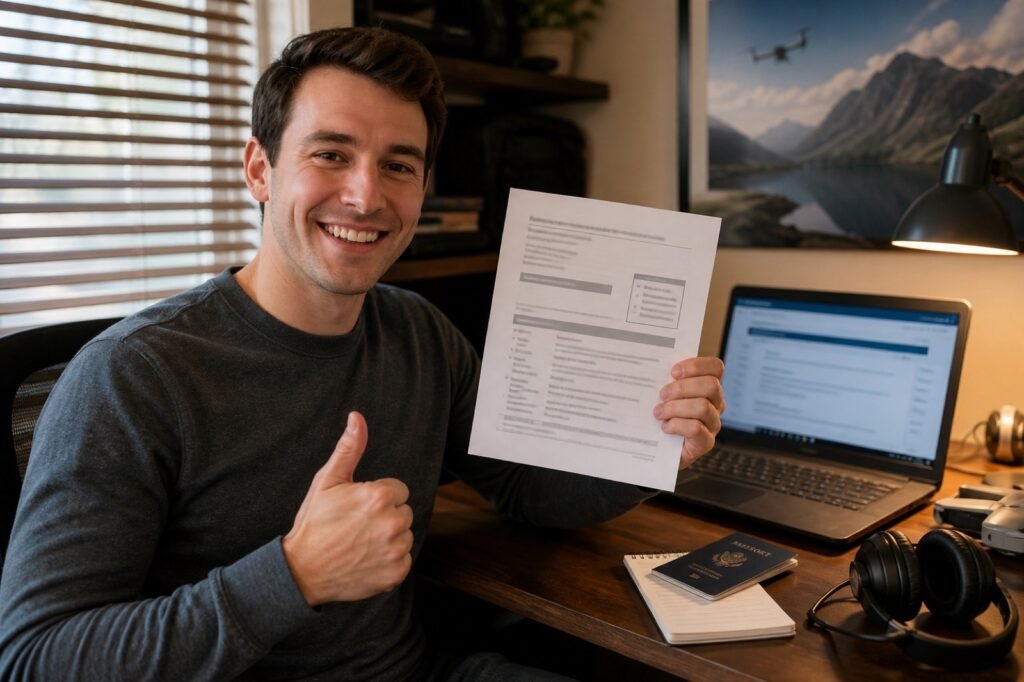
A passing score on the Unmanned Aircraft General (UAG) knowledge test is a milestone, not the certificate. Many candidates celebrate, then stall in IACRA or TSA. This guide covers the after-pass path so your Part 107 practice test work actually turns into a Remote Pilot Certificate you can put on invoices.
Keep using short practice even after you pass. The habits transfer to recurrent training and to job-site briefings.
Step 1: You passed at PSI — now apply
After the knowledge test, you typically complete an application through IACRA (Integrated Airman Certification and Rating Application) for the Remote Pilot Certificate. Have your FTN, test results, and identity details ready. Incomplete applications sit. Typos in names versus government ID delay TSA.
- Use the same legal name as your ID and test registration
- Keep the knowledge test report; you will need the result
- Do not assume the testing center “files everything for you”
Step 2: TSA security vetting
Remote pilot applicants go through Transportation Security Administration vetting. This is why identity consistency matters. If something flags, the certificate will not magically appear in the mail. Watch email, including spam, for follow-up.
Plan calendar time. Do not promise a client a Monday flight the same weekend you sat the test.
Step 3: Temporary vs plastic certificate
Once approved, you can usually download or print temporary authority and later receive the plastic certificate. For commercial work, keep a copy accessible — many sites want to see it during a safety orientation. Register your aircraft as required and mark it with the registration number per current FAA marking rules.
Step 4: Recurrent training is not optional forever
Part 107 privileges must be kept current. Recurrent training / recurrent knowledge requirements exist so the certificate does not become a one-time souvenir. Put a reminder on your calendar the day you are approved. Pilots who let currency lapse lose the ability to exercise privileges until they complete the required recurrent step.
The same modules you drilled on a Part 107 practice test — airspace, weather, operations — return in recurrent material. Keeping a light practice habit makes recurrent training faster.
Step 5: Convert the certificate into paid operations
Industry buyers look for more than a pass slip:
- Remote Pilot Certificate number
- Aircraft registration and Remote ID compliance as applicable
- Insurance (many GCs want aviation/UAS liability)
- A simple ops manual: weather abort, airspace check, night lighting, crew roles
You do not need a giant corporate SMS to start. You do need to look like a PIC, not like someone who only crammed Quizlet.
Common delays (and how to avoid them)
- Name mismatch between IACRA, the knowledge test, and your government ID
- Waiting weeks to start IACRA “until I have time”
- Ignoring TSA follow-up email
- Promising commercial flights before the certificate is actually issued
- Skipping aircraft registration and Remote ID setup until the morning of the first paid job
Build a one-page after-pass checklist the same day you see “pass” at PSI: IACRA submitted, TSA watched, insurance quote requested, aircraft registered, ops notes saved on your phone.
How Skyward still helps after exam day
Use the free daily Part 107 practice test as a 10-minute briefing the week of a new job type (night, controlled airspace, high density altitude). Run a timed mock before recurrent study if you have been away from the books. The Learn hub and blog stay useful as field refreshers, not only as pre-test cram.
Pass the test once. Stay current like a professional.