
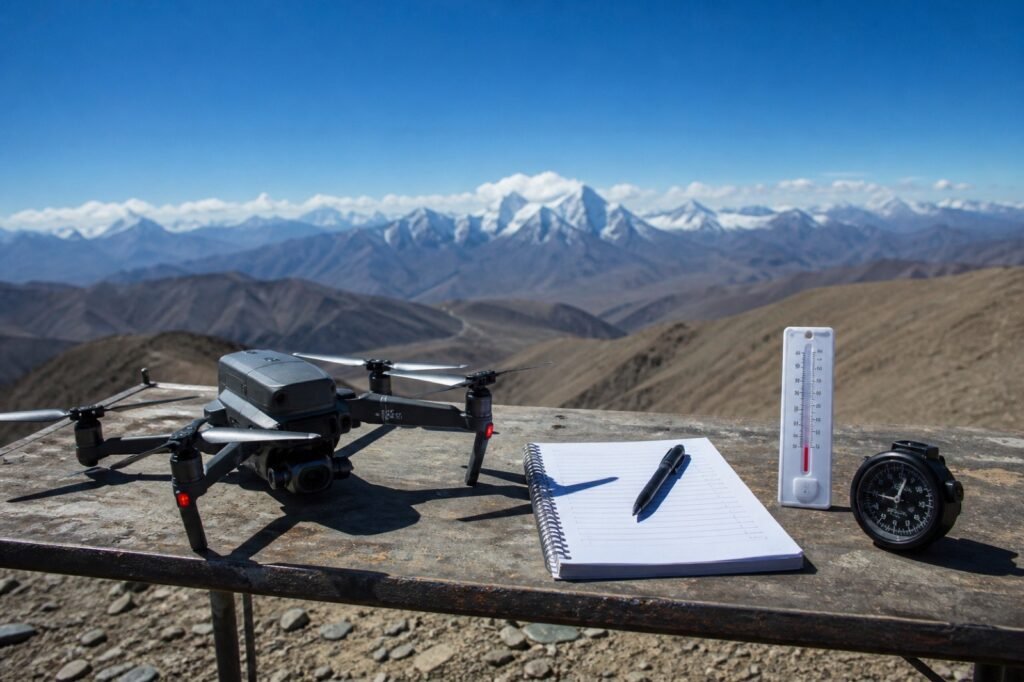
Loading and performance is the module candidates skip because it feels like “airplane stuff.” Then they miss three questions on a Part 107 practice test and, later, brown out a heavily loaded aircraft on a hot Colorado plateau. Density altitude is how the atmosphere reduces performance: high elevation + high temperature + high humidity (to a point) means thinner air, less lift, and weaker propulsion.
The FAA tests this because remote PICs launch aircraft that still obey physics. Manufacturer wind and weight limits are operating limits, not suggestions.
What density altitude means in plain English
Your altimeter may show field elevation. Density altitude is the altitude the aircraft “feels.” On a 95°F afternoon at a 5,000-foot site, performance can resemble a much higher airport. Multirotors hover with less margin. Climb rate drops. Battery endurance falls because motors work harder.
- Hot + high → expect worse hover, climb, and control authority
- Heavy payload (LiDAR, zoom camera, extra battery) compounds the problem
- High density altitude + gusty wind is a common “do not launch” combination
How exam questions disguise it
Stems talk about a mountain site, a summer afternoon, a max-gross takeoff, or a short hover over obstacles. The correct option is usually the conservative performance call: reduce weight, wait for cooler air, or do not attempt the flight — not “it will be fine because GPS is strong.”
A reliable answer pattern
- Identify high density altitude cues (heat, elevation, humidity).
- Identify loading cues (payload, full battery, extra gear).
- Pick the option that preserves performance margin.
Field checklist commercial pilots actually use
- Check forecast temperature vs site elevation before you drive.
- Weigh the aircraft as flown, not as advertised on the box.
- Do a control hover at low altitude before committing to the mapping grid.
- Plan shorter legs and extra batteries when density altitude is high.
- Abort if hover is already near maximum at five feet.
That abort call is PIC judgment. Clients would rather reschedule than watch an aircraft settle into sagebrush.
How to train this on practice tests
Do not memorize a density-altitude slogan. After every miss, rewrite the scenario as a launch decision. Then drill it again on the next free set. When loading/performance is your weak column, bias study toward those explanations instead of repeating regulations you already know.
Start with today’s Part 107 practice test, review the Learn weather/performance notes, and validate with a 60-question mock before you book PSI.
More guides: Skyward blog.